×
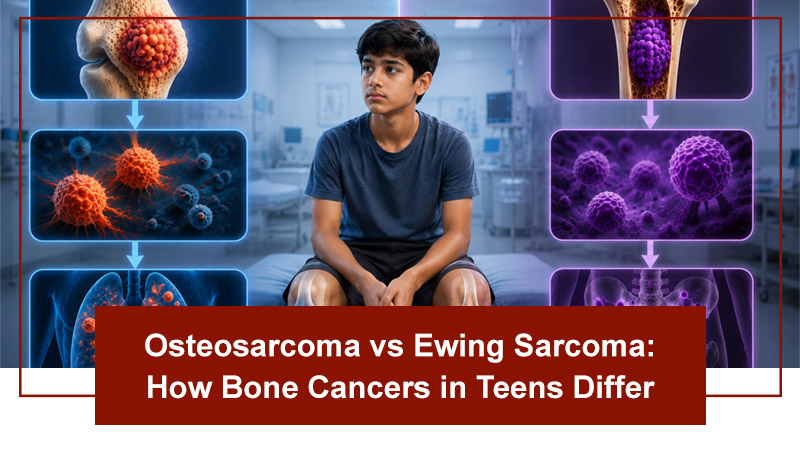
Bone cancer in a teenager is rare, but when it does happen, osteosarcoma and Ewing sarcoma account for most cases. Both typically present with bone pain and swelling, both tend to strike during the adolescent growth spurt, and both are treated with a combination of chemotherapy and surgery. Beneath these similarities, though, the two cancers differ meaningfully in where they tend to occur, what they look like under the microscope, how they are staged, and in some of the finer points of treatment.
Understanding the distinction matters less for parents trying to self-diagnose and more for appreciating why a bone biopsy, not just an X-ray, is the essential step in figuring out exactly what type of tumor is present and how to treat it correctly.